
EAA 129, 2009: Criminals and Paupers: the Graveyard of St Margaret Fyebriggate in combusto, Norwich
Ann Stirland
Free
Download from ADS
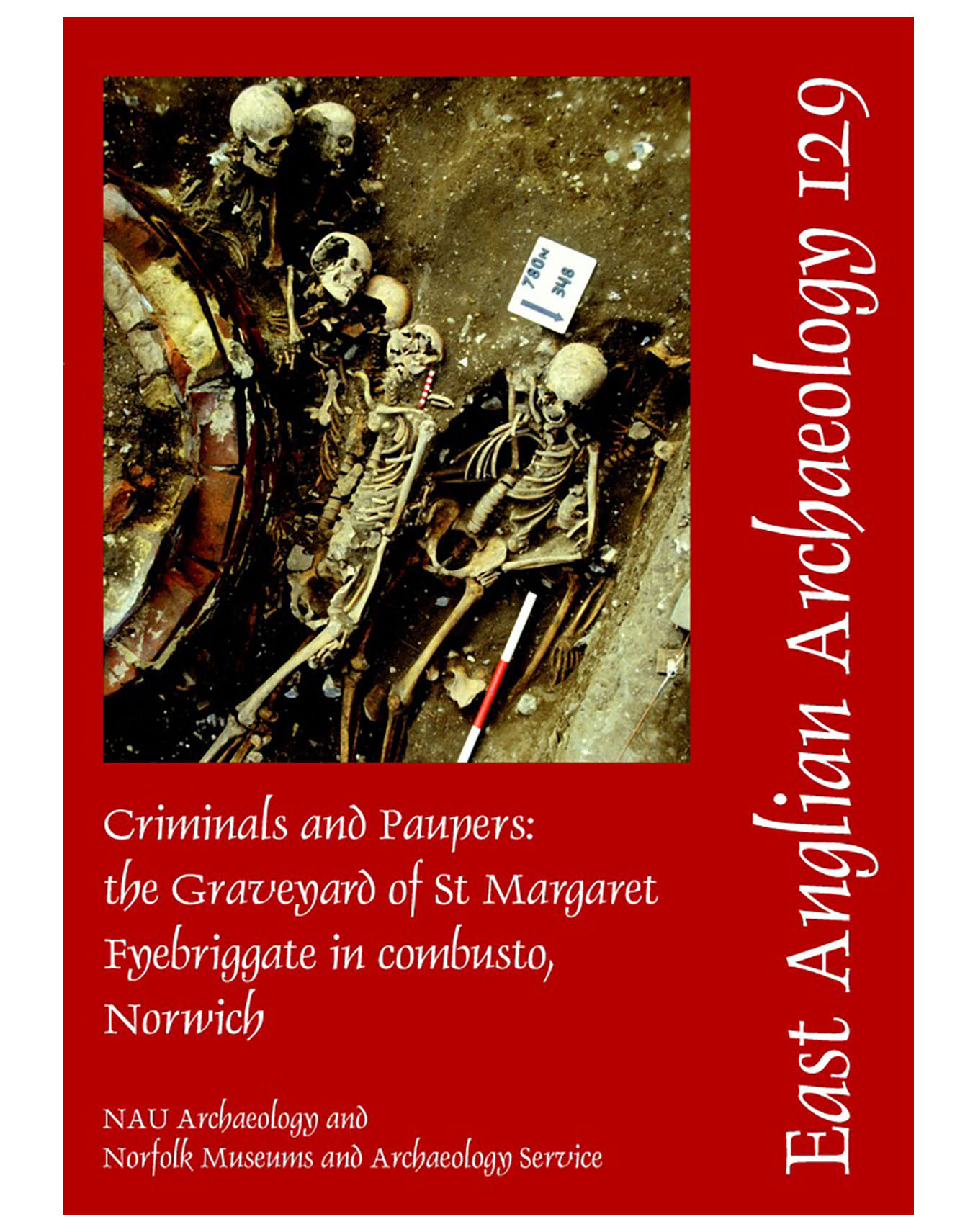
Excavation in 1987 at the site of this church revealed much of the graveyard, which had been in use from the 12th to the 15th century. Remains of over 1000 individuals were removed archaeologically from the cemetery. Of these, 436 were articulated individuals, the rest being represented as charnel. Remains of 413 individuals were complete enough to merit detailed examination and analysis, and this report is concerned with the palaeopathology of these burials.
The analysis of the human remains produced dramatic and unprecedented results in the field of epidemiology, including an important early group of six cases of treponemal disease. A classic example of Paget’s disease and possibly a rare form of chondrodysplasia (dwarfism) have also been identified, as well as a wide range of other pathology.
The earliest documentary reference to the church occurs in 1254, and includes the comment ubi sepeliuntur suspensi (‘where those who were hanged are buried’). Burial ceased when the church became redundant in 1468, and the parish was amalgamated with All Saints to the south.
Full reference:
Stirland, A., 2009, Criminals and Paupers: the Graveyard of St Margaret Fyebriggate in combusto, Norwich, East Anglian Archaeology 129
A4, 54pp
ISBN 978 0 905594 47 7
Contact us
East Anglian Archaeology is an externally-funded project hosted by Norfolk County Council, based within the Historic Environment Service.
East Anglian Archaeology, Norfolk Historic Environment Service, Norfolk County Council, County Hall, Martineau Lane, Norwich NR1 2DH
Email: EAA Managing Editor
Download books
Books older than one year are generally available for download by visiting the relevant page on this website, or direct from the Archaeology Data Service.
Order online
Books still in print are available to buy as hard copies from Script Books.